
Posts with tag 'Real Estate for sale in Brewster OH'
Subscribe and receive email notifications of new blog posts.
 RSS Feed
- 2025 | 1 Posts
- 2024 | 2 Posts
- 2023 | 5 Posts
- 2022 | 28 Posts
- 2020 | 4 Posts
- 2019 | 10 Posts
- 2018 | 7 Posts
- 2017 | 1 Posts
- 2016 | 6 Posts
3
7 Costly Mistakes Home Sellers Make (And How to Avoid Them)

No matter what's going on in the housing market, the process of selling a home can be challenging. Some sellers have a hard time saying goodbye to a treasured family residence. Others want to skip ahead to the fun of decorating and settling into a new place. Almost all sellers want to make the most money possible.
Whatever your circumstances, the road to the closing table can be riddled with obstacles — from issues with showings and negotiations to inspection surprises. But many of these complications are avoidable when you have a skilled and knowledgeable real estate agent by your side.
For example, here are seven common mistakes that many home sellers make. These can cause an...
15
The State of Real Estate in 2022
Higher Rates and Short Supply: The State of Real Estate in 2022

The last two years caught many of us off guard—and not just because of the pandemic. They also ushered in the hottest housing market on record, with home prices rising nationally by nearly 19% in 2021, driven primarily by low mortgage rates and a major supply shortage.1
But while some had hoped 2022 would bring a return to normalcy, the U.S. real estate market continues to boom, despite rising interest rates and decreasing affordability.
So what's driving this persistent demand? And is there an end in sight?
Here are three factors...
13
2020 Outlook: Real Estate Market Forecast

We're in the midst of the longest economic expansion in U.S. history, and economists think there's still room to grow. A recent survey by the National Association for Business Economics found that experts believe the U.S. economy will remain positive throughout 2020.1
Still, given that recessions are a natural (and necessary) part of a business cycle, we know this period of growth will inevitably end. So you may be wondering … how will an eventual recession impact the real estate market?
Many Americans assume a recession would lead to a decline in housing prices like we saw during the Great Recession of 2008. But the real estate market crash we experienced wasn't typical. In fact, the last recession wasn't typical at all. It was the worst economic downturn since the Great Depression of the 1930s.
ATTOM Data Solutions analyzed real estate prices during the last five recessions and found that, in the majority of cases, home prices actually went up. Only twice (in 1990 and 2008) did prices decline, and in 1990 it was by less than one percent.2
So what can historical precedent—combined with today's data—tell us about the future of real estate? Here's where experts predict the housing market is headed in 2020 and beyond.
HOME PRICES WILL KEEP RISING
Economists predict U.S. housing prices will continue to rise, regardless of a recession. In fact, property data firm CoreLogic forecasts a faster rate of growth for home prices in 2020 than we saw in 2019, with the biggest gains at the lower end of the market.3
Arch MI Chief Economist Ralph DeFranco expects entry-level home prices to increase faster than incomes this year, making it even more difficult for many first-time buyers to afford to enter the market.4
"Low interest rates and a shortage of starter homes will continue to push up prices," predicts DeFranco. "This is especially the case for lower price points, since builders have tended to focus on more expensive, higher-profit houses and less on replenishing low inventories of entry-level homes."4
"Real estate is on firm ground with little chance of price declines," said National Association of Realtors Chief Economist Lawrence Yun. "However, in order for the market to be healthier, more supply is needed to assure home prices as well as rents do not consistently outgrow income gains."5
What does it mean for you? If you have the ability and desire to buy a home now, don't let a fear of recession or falling prices hold you in limbo. Economists expect home values, as well as rent prices, to continue rising. So you'll likely pay more the longer you wait.
INVENTORY CONSTRAINTS WILL CONTINUE
According to Redfin, Americans are staying in their homes longer. In 2019, the average homeowner had resided in their home for 13 years, up from just eight years in 2010. That means there are fewer homes available today for those who want to buy.6
It's possible that an increase in new construction could offer some relief. The National Association of Realtors (NAR) expects single-family housing starts to total one million this year, the highest level since 2007. And NAR Chief Economist Lawrence Yun predicts the average price of new construction will decline slightly as builders shift to building smaller, more affordable homes.7
However, these efforts may not be enough to meet current demand. "Despite improvements to new construction and short waves of sellers, next year will once again fail to bring a solution to the inventory shortage," predicts Realtor.com Senior Economist George Ratiu. "In 2020, we expect inventory to struggle to grow and could instead reach a historic low level."8
What does it mean for you? If you're looking to buy a starter home, be prepared to compete for the best listings. Start your search early, and if you're up against a deadline (like a new baby), build in plenty of time to find the right home. We can help you assess your options, including new construction and up-and-coming developments.
MORTGAGE RATES WILL REMAIN LOW
Mortgage rates have declined more than a full percentage point since November 2018, when they hit a recent peak of 4.94%.9 The Mortgage Bankers Association predicts rates will remain low, at around 3.7%, through mid-2021.10
While it may not seem significant, on a $200,000 30-year fixed-rate mortgage, that lower rate means buyers could save around $145 on their monthly payment and more than $52,000 over the life of their mortgage. Lower mortgage rates make homeownership more accessible and affordable for buyers.
Although economists expect mortgage rates to stay low, they caution against waiting to act. Economic factors, shifts in supply and demand, or unforeseen impacts of the November election could cause rates to rise unexpectedly. "We recommend borrowers with long-term plans of staying in their homes to lock in a low rate now because there's no telling how long these low rates will last," warns Preetam Purohit, a capital markets trader at Embrace Home Loans.11
What does it mean for you? If you're looking to buy a home, act soon to lock in a historically low mortgage rate. It will minimize your monthly payment and could save you a bundle over the long term. And if you plan to stay in your current home for a while, consider whether it makes sense to refinance your mortgage at today's lower rates.
MILLENNIALS WILL DRIVE THE MARKET
Millennials are expected to account for more than half of all mortgages this year, outnumbering Generation X and Baby Boomers combined. It's not surprising, considering their age and stage of life. In 2020, the largest cohort of millennials will turn 30, and the oldest millennials will turn 39.8
"Family changes tend to drive home-buying decisions," explains Realtor.com Chief Economist Danielle Hale. "Millennials are going to be active in the housing market not just because they're just at the age when they're thinking about becoming first-time home buyers, but they're also in the age range when they're having kids."12
Younger millennials flocked to urban centers that offered easy access to work, shopping, and restaurants. But high prices, lack of square footage, and subpar schools are driving millennials out to the suburbs as they begin to marry and expand their families.
In response, a new model for suburban living has emerged. "Hipsturbias," or mixed-use communities that bring the live/work/play concept to the suburbs, were recently named one of the top real estate trends for 2020 by the Urban Land Institute.4
What does it mean for you? If you're a millennial who has been priced out of urban living or is looking for more space for your growing family, a number of suburbs in our area have a lot to offer. We can point you towards the communities that will best meet your needs. And if you're a homeowner with plans to sell, give us a call. We know how to market your home to millennials … and can help you sell quickly for top dollar by appealing to this leading market segment!
WE'RE HERE TO GUIDE YOU
While national real estate numbers can provide a "big picture" outlook, real estate is local. As local market experts, we can guide you through the ins and outs of our market and the issues most likely to impact sales and home values in your particular neighborhood.
If you're considering buying or selling a home in 2020, contact us now to schedule a free consultation. We'll work with you to develop an action plan to meet your real estate goals this year.
|
START PREPARING TODAY
If you plan to SELL this year:
|
Sources:
- NBC News -
https://www.nbcnews.com/business/economy/what-impending-recession-new-survey-shows-most-people-think-they-n1098511 - Curbed -
https://www.curbed.com/2019/1/10/18139601/recession-impact-housing-market-interest-rates - HousingWire -
https://www.housingwire.com/articles/corelogic-expects-home-prices-to-do-this-in-the-next-12-months/ - Forbes -
https://www.forbes.com/sites/alyyale/2019/11/15/2020-housing-outlook-expert-predictions-for-mortgage-rates-home-prices-tech-and-more/#343ea4522935 - National Association of Realtors -
https://www.nar.realtor/newsroom/expect-continued-economic-growth-slower-real-estate-price-gains-and-small-chance-for-recession-in - Redfin -
https://www.redfin.com/blog/homeowners-staying-in-their-homes-longer/ - HousingWire -
https://www.housingwire.com/articles/builders-are-coming-to-the-housing-markets-rescue/ - com -
https://www.realtor.com/research/2020-national-housing-forecast/ - YCharts -
https://ycharts.com/indicators/30_year_mortgage_rate - MBA Mortgage Market Forecast November 2019 -
https://www.mba.org/news-research-and-resources/research-and-economics/forecasts-and-commentary - Dallas Morning News -
https://www.dallasnews.com/sponsored/real-estate/2019/11/23/experts-predict-where-mortgage-interest-rates-land-in-2020/ - com -
https://www.realtor.com/news/trends/biggest-changes-coming-in-2020-real-estate-and-tips-for-buyers-and-sellers/
21
Real Estate Relocation Guide: 7 Steps to a Seamless Move
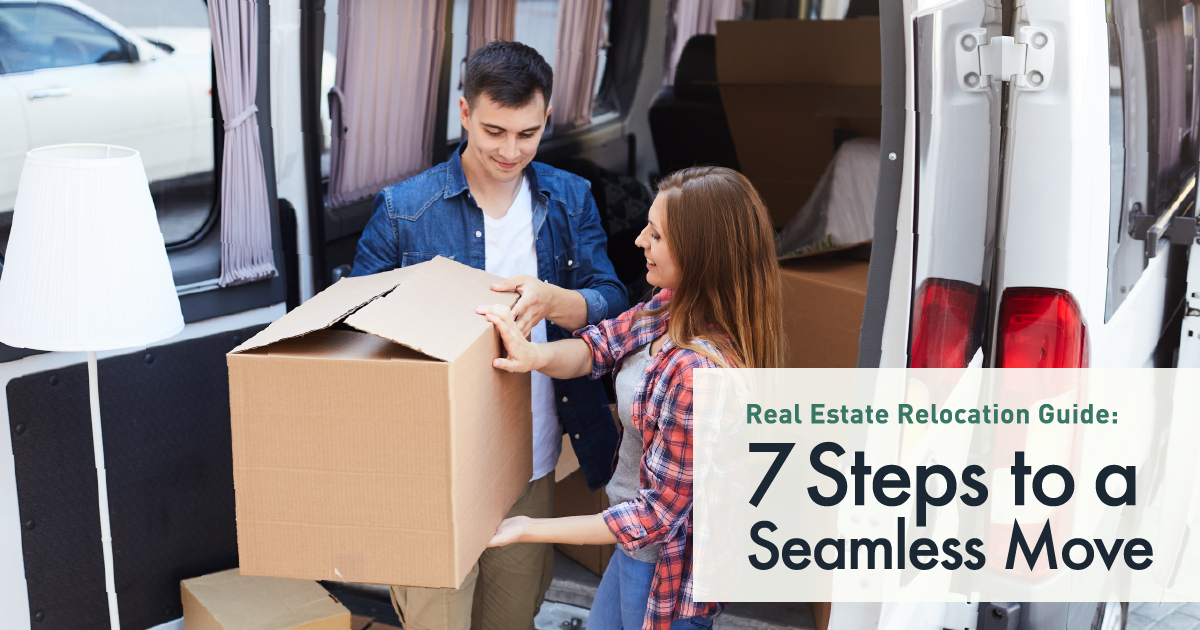
Whatever your reasons are for relocating to a new area, the process can feel overwhelming.
Whether you're moving across across town or across the country, you'll be changing more than your address. Besides a new house, you may also be searching for new jobs, schools, doctors, restaurants, stores, service providers and more.
Of course you'll need to pack, make moving arrangements, and possibly sell your old home. With so much to do, you may be wondering: Where do I start?
In this guide, we outline seven steps to help you get prepared, get organized, and get settled in your new community. Our hope is to alleviate the hassle of relocating—so you can focus on the exciting adventure ahead!
- Gather Information
If you're unfamiliar with your new area, start by doing some research.1 Look for data on average housing prices, demographics, school rankings and crime statistics. Search for maps that illustrate local geography, landmarks, public transportation routes and major interstates. If you're moving across the country, research climate and seasonal weather patterns.
Check out local newspapers and blogs for information on political issues and developments that could impact your new community. You may also want to search for online forums and Facebook Groups relevant to your new area. These can be a great place to find information, ask questions and just observe local attitudes and outlooks.
If you're relocating for a job, find out if your new employer offers any relocation assistance. Many large corporations have a designated human resources professional to assist employees with relocation efforts, while others may contract this service out to a third party. Some employers will also cover all or a portion of your relocation and moving costs.
By gathering this information up front, you'll be better prepared to make informed decisions down the road.
|
Let us know if you'd like assistance with your information gathering process. We have a wealth of knowledge about this area, and we keep a number of reports and statistics on file in our office. We would be happy to share information and answer any questions you may have. |
- Identify Your Ideal Neighborhoods
Once you've sufficiently researched your new area, you can start to identify your ideal neighborhoods.
The first step is to prioritize your "needs" and "wants." Consider factors such as budget; commute time; quality of schools; crime rate; walkability; access to public transportation; proximity to restaurants, shopping, and place of worship; and neighborhood vibe.
If possible, visit the area in person to get a feel for the community. If you're comfortable, strike up conversations with local residents and ask about their experiences living in the area.
Still not sure which neighborhood is the best fit for you and your family? Contact a local real estate agent for expert assistance. It's usually the most efficient and effective way to narrow down your options.
|
We provide neighborhood assessments and advice as a free service if you're relocating to our area. Or, if you're moving out of town, we can refer you to a local agent who can help. |
- Find Your New Home (and Sell Your Old One)
Once you've narrowed down your list of preferred neighborhoods, it's time to start looking for a home. If you haven't already contacted a real estate agent, now is the time. They can search for current property listings that meet your needs, typically at no cost to you.
Create another list of "needs" and "wants," but this time for your new home. Include your basic requirements for square footage, bedrooms and bathrooms, but also think about what other factors are important to you and your family. An updated kitchen? A large backyard? Double sinks in the master bathroom?
Narrow your list down to your top 10 and prioritize them in order of importance.2 This will give you a good starting point to begin your home search. Unless you have an unlimited budget, don't expect to find a home with everything on your list. But having a prioritized list can help you (and your agent) understand which home features are the most important, and which ones you may be willing to sacrifice.
If you already own a home, you'll also need to start the process of selling it or renting it out. A real estate agent can help you evaluate your options based on current market conditions. He or she can also give you an idea of how much equity you have in your current home so you know how much you can afford to spend on your new one.
Your agent can also advise you on how to time your sale and purchase. While some buyers are able to qualify for and cover the costs of two concurrent mortgages, many are not. There are a number of options available, and a skilled agent can help you determine the best course given your circumstances.
|
We would love to assist you if you have plans to buy or sell a home in our area. Please contact us to schedule a free consultation so we can discuss your unique needs and devise a custom plan to make your relocation as seamless as possible. If you're relocating outside of our area, we can help you find a trusted agent in your new city. |
- Prepare for Your Departure
While everyone considers packing a fundamental part of moving, we often overlook the emotional preparation that needs to take place. If you have children, this can be especially important. Communicate the move in an age-appropriate way, and if possible take them on a tour of your new home and neighborhood. This can alleviate some of the mystery and apprehension around the move.4
Allow yourself plenty of time to pack up your belongings. Before you start, gather supplies, including boxes, tape, tissue paper and bubble wrap. Begin with non-essentials—such as off-season clothes or holiday decorations—and sort items into four categories: take, trash, sell and donate/give away.5
To make the unpacking process easier, be sure to label the top and sides of boxes with helpful information, including contents, room, and any special instructions. Keep a master inventory list so you can refer back to it if something goes missing.
If you will be using a moving company, start researching and pricing your options. To ensure an accurate estimate of your final cost, it's best to have them conduct an in-person walkthrough. Make sure you're working with a reputable company, and avoid paying a large deposit before your belongings are delivered.6
If you plan to drive to your new home, map out the route. And, if necessary, make arrangements for overnight accommodations along the way. If driving is not a good option, you may need to have your vehicles transported and make travel arrangements for you, your family and your pets.
Lastly, if you will be leaving friends or family behind, schedule final get-togethers before your departure. The last days before moving can be incredibly hectic, so make sure you block off some time in advance for proper goodbyes.
|
Looking for a reputable moving company? We are happy to provide referrals, as well as recommendations on where to procure packing supplies in our area. |
- Prepare for Your Arrival
To make your transition go smoothly, prepare for your arrival well before moving day. Depending on how long your belongings will take to arrive, you may need to arrange for temporary hotel accommodations. If you plan to move in directly, pack an "essentials box" with everything you'll need for the first couple of nights in your new home, such as toiletries, toilet paper, towels, linens, pajamas, cell phone chargers, snacks, pet food and a change of clothes.7 This will keep you from searching through boxes after an exhausting day of moving.
Arrange in advance for your utilities to be turned on, especially essentials like water, electricity and gas. (And while you're at it, schedule a shut-off date for your current utilities.) Update your address on all accounts and subscriptions and arrange to have your mail forwarded through the postal service. If you have children, register them for their new school or daycare and arrange for the transfer of any necessary records.
You may want to have the house professionally cleaned before moving in. And if you plan to remodel, paint or install new flooring, it's easier to have it done before you bring in all of your belongings.8 However, it's not always feasible without someone you trust locally who can supervise. Another option is to keep a portion of your things in storage while you complete some of these projects.
If there are no window treatments, you may need to install some (or at least put up temporary privacy film), especially in bedrooms and bathrooms. And if appliances are missing, consider purchasing them ahead of time and arranging for delivery and installation shortly after you arrive. Just be sure to check measurements and installation instructions carefully so you aren't stuck with an appliance that doesn't fit or that requires costly modifications to your new home.
If you own a car, check the requirements for a driver's license and vehicle registration in your new area and contact your insurance company to update your policy.8 If you will rely on public transportation, research options and schedules.
|
If you're relocating to our area, we can help! We offer "VIP Relocation Assistance" to all of our buyer clients. Contact us for a list of preferred hotels, utility providers, housekeepers, contractors and more! |
- Get Settled In Your New Home
While staring at an endless pile of boxes can feel daunting, you should take advantage of this opportunity to make a fresh start. By creating a plan ahead of time, you can ensure your new house is thoughtfully laid out and well organized.
If you followed our suggestion to pack an "essentials box" (see Step 5), you should have easy access to everything you'll need to get you through the first couple of nights in your new home. This will allow you some breathing room to unpack your remaining items in a deliberate manner, instead of rushing through the process.7
If you have young children, consider unpacking their rooms first. Seeing their familiar items can help them establish a sense of comfort and normalcy during a confusing time. Then move on to any items you use on a daily basis.10
Pets can also get overwhelmed by a new, unfamiliar space. Let them adjust to a single room first, which should include their favorite toys, treats, food and water bowl, and a litter box for cats. Once they seem comfortable, you can gradually introduce them to other rooms in the home.11
As you unpack, make a list of items that need to be purchased so you're not making multiple trips to the store. Also, start a list of needed repairs and installations. If you have a home warranty, find out what's covered and the process for filing a service order.
Although you may be eager to get everything unpacked, it's important to take occasional breaks. Have some fun, relax and explore your new hometown!
|
Need help with unpacking, organizing or decorating your new home? Contact us for a list of recommended professionals in our area. And when you're ready to start exploring local "hot spots," we'd love to fill you in on our favorite restaurants, stores, parks and other attractions! |
- Get Involved In Your New Community
Studies show that moving can lead to feelings of loneliness and depression. People who have recently moved tend to be isolated socially, more stressed, and less likely to participate in exercise and hobbies. However, there are ways to combat these negative effects.12
First, get out and explore. In a 2016 study, recent movers were shown to spend less time on physical activities and more time on their computers, which has been proven to lead to feelings of depression and loneliness. Instead, get out of your house and investigate your new area. And if you travel by foot, you'll gain the advantages of fresh air and exercise.12
Combat feelings of isolation by making an effort to meet people in your new community. Find a local interest group, take a class, join a place of worship or volunteer for a cause. Don't wait for friends to come knocking on your door. Instead, go out and find them.
Finally, be a good neighbor. Make an effort to introduce yourself to your new neighbors, invite them over for coffee or dinner, and offer assistance when they need it. Once you've developed friendships and a support system within your new neighborhood, it will truly start to feel like home.
|
Want more ideas on how to get involved in your community? Contact us for a free copy of our report, "Welcome Home: 10 Tips to Turn Your Neighborhood Into a Hometown Haven." |
LET'S GET MOVING
While moving is never easy, these seven steps offer an action plan to get you started on your new adventure. To avoid getting overwhelmed, focus on one step at a time. And don't hesitate to ask for help!
In a 2015 study, 61 percent of participants ranked moving at the top of their stress list, above divorce and starting a new job.13 But with a little preparation—and the right team of professionals to assist you—it is possible to have a positive relocation experience.
We specialize in assisting home buyers and sellers with a seamless and "less-stress" relocation. Along with our referral network of movers, handymen, housekeepers, decorators, contractors and other service providers, we can help take the hassle and headache out of your upcoming move. Give us a call or message us to schedule a free, no-obligation consultation!
Sources:
- You Move Me -
https://www.youmoveme.com/us/blog/105-tips-for-a-successful-relocation - com -
https://www.houselogic.com/buy/house-hunting/must-have-items/ - Livestrong -
https://www.livestrong.com/article/436651-the-effects-of-sunlight-fresh-air-on-the-body/ - Parents Magazine -
https://www.parents.com/parenting/money/buy-a-house/make-moving-easier-on-you-and-your-kids/ - The Spruce -
https://www.thespruce.com/starting-to-pack-for-your-move-2436470 - com -
https://www.moving.com/tips/hiring-quality-movers/ - The Spruce -
https://www.thespruce.com/unpack-your-entire-home-2435815 - com -
https://www.houselogic.com/buy/moving-in/before-you-move/ - HGTV -
https://www.hgtv.com/design/real-estate/moving-checklist - com -
https://www.moving.com/tips/how-to-unpack-and-organize-your-house/ - ASPCA -
https://www.aspca.org/pet-care/general-pet-care/moving-your-pet - Psychology Today -
https://www.psychologytoday.com/us/blog/is-where-you-belong/201607/why-youre-miserable-after-move - The Daily Express -
https://www.express.co.uk/news/uk/574171/Divorce-stressful-moving-home
30
Don’t Get Burned – Get a Home Inspection to Save Money on Your Next Purchase

Okay, you made one of the most important decisions in your life: you're buying a home! You found your ideal home. It's in your desired neighborhood, close to everything you love, you dig its design and feel, and you're ready to finalize the deal.
But, whoa … wait a minute! Buying a home isn't like buying a toaster. If you discover something's wrong with your new home, you can't return it for a refund or an even exchange. You're stuck with your buying decision. Purchasing a home is an important investment and should be treated as such. Therefore, before finalizing anything, your "ideal" home needs an inspection to protect you from throwing your hard-earned money into a money pit.